
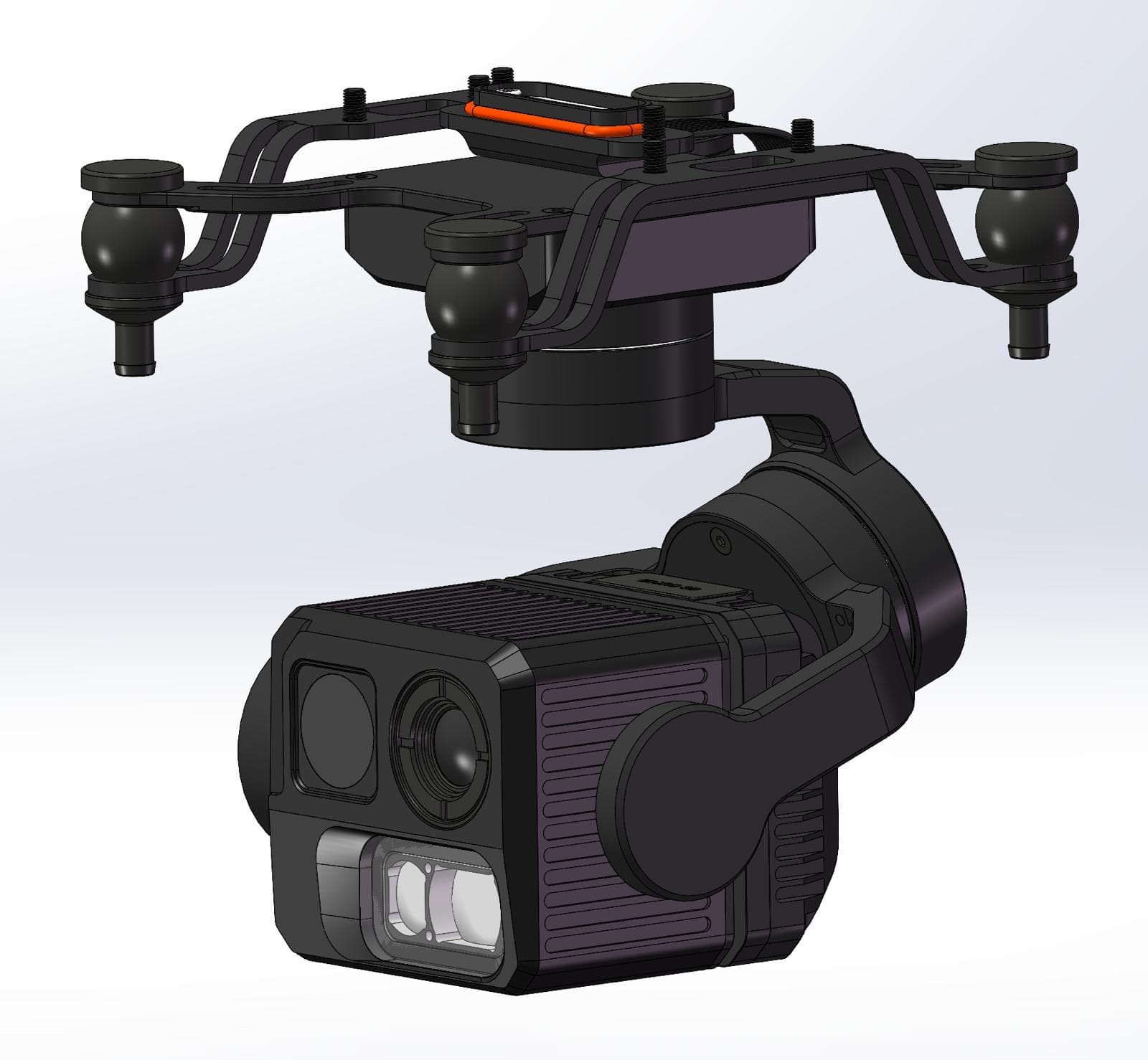
T3
Tri-Sensor Camera
Aerial imaging payload with 640×512 radiometric thermal, 48 MP visible, and a 1200 m laser rangefinder in a 385 g IP67 module. For integrators mounting on existing drone fleets.
SpecificationsA compact, stabilized gimbal module combining a 48 MP visible camera, radiometric thermal sensor, and 1200 m laser rangefinder — engineered for drone manufacturers, integrators, and system developers.
Designed for seamless integration into custom UAV platforms. Optional IP67 evaluation drone available for testing and demonstration.
Tri-sensor payloads and evaluation platforms designed for OEM drone integration.
Aerial imaging payload with 640×512 radiometric thermal, 48 MP visible, and a 1200 m laser rangefinder in a 385 g IP67 module. For integrators mounting on existing drone fleets.
SpecificationsThe T3 is a compact tri-sensor payload designed for OEM drone manufacturers and system integrators. It combines a 48 MP visible camera, radiometric thermal sensor, and a 1200 m laser rangefinder in a stabilized gimbal module optimized for mapping, inspection, and situational awareness applications.
The payload is engineered for straightforward integration into custom UAV platforms, with standardized power, data, and control interfaces. It supports flexible mounting options and provides synchronized sensor outputs suitable for real-time processing or onboard recording. An ultra-lightweight 385 g design preserves flight endurance on host UAV platforms.
For teams without an immediate integration platform, an optional IP67 evaluation drone is available to accelerate testing, validation, and field demonstrations. This platform is provided solely for evaluation and does not represent a commercial drone system.
1/2-inch CMOS · 4K @ 30 fps · 25 mm equiv. f/2.8
12 µm · 30 Hz · NETD ≤ 50 mK · −20 to 550 °C
30% reflectivity · 1.69 m blind zone · ±1–3 m
107.5 × 83.4 × 107.7 mm · IP67 · −40 to +80 °C
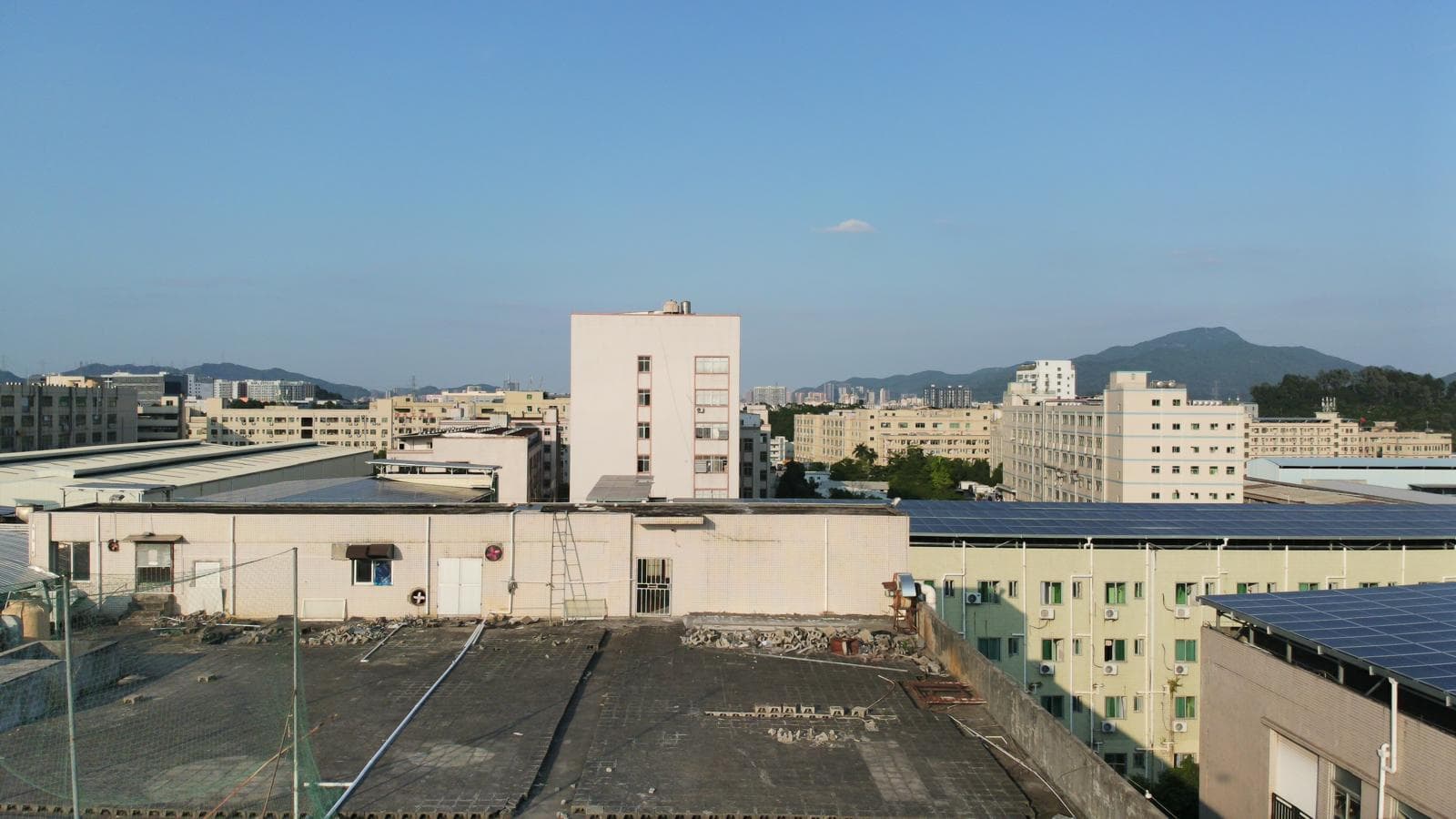
Daylight imagery
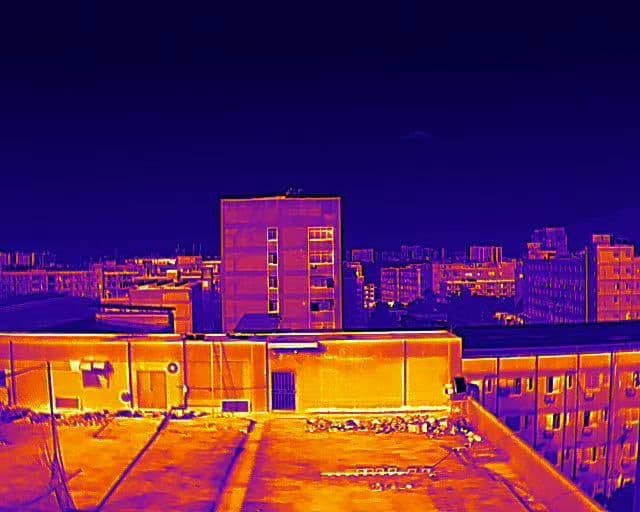
Heat-signature isolation
Both feeds run simultaneously and synchronize through the camera's onboard processor. One flight covers inspection and surveillance — shadowed roof hotspots, idle equipment, and human presence become visible even when the visible channel cannot resolve them.
640×512 radiometric thermal sensor with ≤50 mK NETD and 16-bit R-JPEG export.
High-resolution 48-megapixel imaging with 4K video and 8000×6000 stills.
Long-range distance measurement with 1–3 m accuracy for mapping and geo-referencing.
IP67 sealing, −40 to +80 °C operation, and a stabilized gimbal for harsh missions.
Designed for integrators — backed by 20+ years of imaging system engineering and scalable manufacturing.
Comprehensive integration specifications for the T3 tri-sensor module.
High-resolution 48 MP imaging documents hardware condition while radiometric thermal highlights hot joints and load anomalies. The 1200 m laser provides precise range-to-defect data for automated reporting and GIS workflows.
640×512 thermal with ≤50 mK sensitivity isolates heat signatures in low-visibility terrain, while the visible channel confirms subjects and context. Laser-derived distance supports crew vectoring and safe approach planning.
Day/night imaging with IP67 protection supports perimeter monitoring, incident response, and maritime patrol. Thermal contrast identifies movement; visible detail supports evidence capture; laser ranging provides geo-referenced situational data.
Radiometric R-JPEG enables post-mission temperature analysis for solar arrays and mechanical assets. Visible imaging captures structural detail, while laser measurements anchor findings to precise locations for maintenance workflows.
Low-gain thermal mode (0–550 °C) penetrates smoke to reveal heat sources, while the visible channel maintains scene awareness. Laser distance assists with safe standoff positioning and structural assessment.
Laser ranging to 1200 m feeds geo-referenced points directly into flight software for waypoint capture and rapid distance verification. High-resolution visible imaging supports mapping, modeling, and documentation.
Integrated visible, thermal, and event-triggered capture support patrol vehicles and mobile command units. Multi-sensor data improves incident documentation and enhances operational awareness.
Thermal detection identifies animals through canopy or terrain, while visible imaging provides species confirmation and behavioral context. Laser-tagged coordinates standardize long-term ecological studies and anti-poaching patrols.
IP67-rated payload withstands salt spray and marine humidity across compatible UAV platforms. Thermal and visible imaging capture low-altitude coastal scenes, while laser ranging supports distance-safe flight over water.
Thiessen provides high-bandwidth Mobile Network Video Recorder (MNVR) modules for integrators requiring high-capacity off-board storage and real-time cellular transmission. Engineered for seamless pairing with the T3 payload, these modules support multi-channel HD capture and wireless offloading for complex ground-to-air deployments in mission-critical fleet environments.
Synchronous 4-channel 2K capture with multi-sensor metadata and high-bitrate video for forensic-grade evidence and integrator-built fleet systems.
Low-latency cellular uplink for live video, telemetry, and remote command-and-control across integrated robotic fleets and mission-critical vehicles.
High-bandwidth WiFi link for rapid evidence transfer and automated data synchronization at station depots without cellular cost.
Thiessentech OÜ is an EU-based imaging design house specializing in multi-sensor payload engineering for OEM platforms. Founded in 2020 in Estonia and built on more than 20 years of imaging systems experience, the company develops visible, thermal, and laser-based technologies for integrators requiring high-reliability airborne and ground-side sensing modules.
Since 2014, the team has engineered and industrialized 50+ imaging systems and delivered 2M+ units through global OEM programs. This background in optical design, embedded firmware, and high-volume manufacturing now supports the T3 program and UAV integrators across Europe and the Asia-Pacific region.
Visible, thermal, and laser channels unified under a single processing and synchronization pipeline for OEM payloads.
Three-axis mechanical and software stabilization tuned for airborne platforms and integrator-controlled flight software.
Real-time camera firmware and SDK development for deep integration with native flight-software control.
Lens selection, IR optics, and full-spectrum characterization for high-performance multi-sensor payloads.
Scalable production with proprietary tooling, rigorous QC, and full supply-chain ownership for high-volume OEM rollout.
Regulatory expertise in licensing and shipping dual-use, thermal-equipped products into international markets.
Single-unit pricing for hardware validation. Volume production schedules and tiered OEM pricing are available upon request.
USD 2,800/ unit
USD 3,000/ unit
USD 5,500/ unit
Depending on your selected evaluation path, your kit includes the following hardware and documentation. Hover either card to highlight its contents.
Camera
Cables
SDK & Docs
Drone
Controller

Case
Designed for long-range missions, the TD3 platform delivers a stable 7 km FHD digital video link without any SIM card, network coverage, or cellular infrastructure.
Saltwater-proof IP67 airframe with self-righting recovery, Level 7 wind resistance, Level 5 sea-state tolerance, 2 kg payload, 29-minute endurance, and water takeoff and landing for maritime operations.
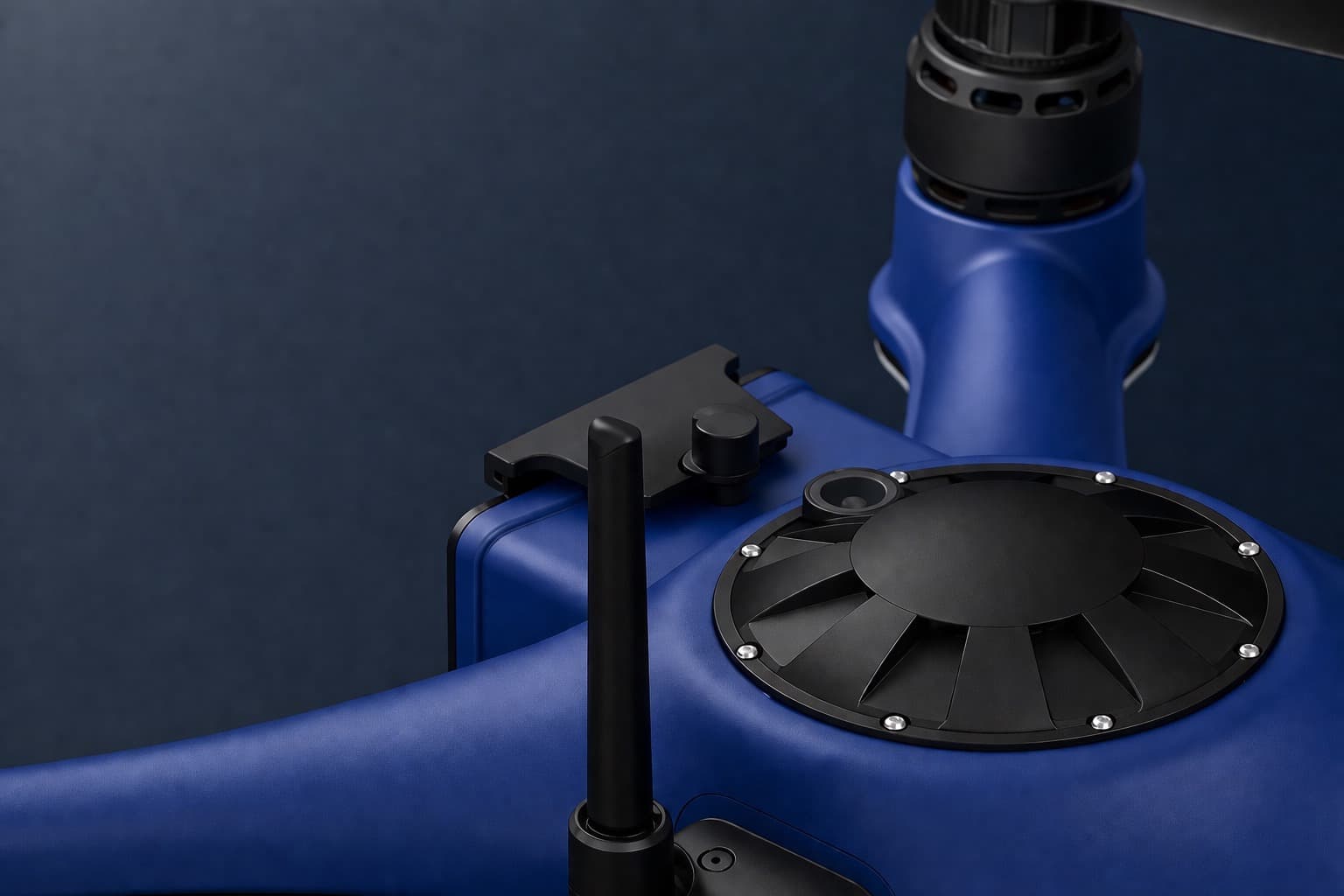
The sealed airframe remains fully watertight while accurately sensing external pressure, enabling stable flight control in rapidly changing maritime environments.
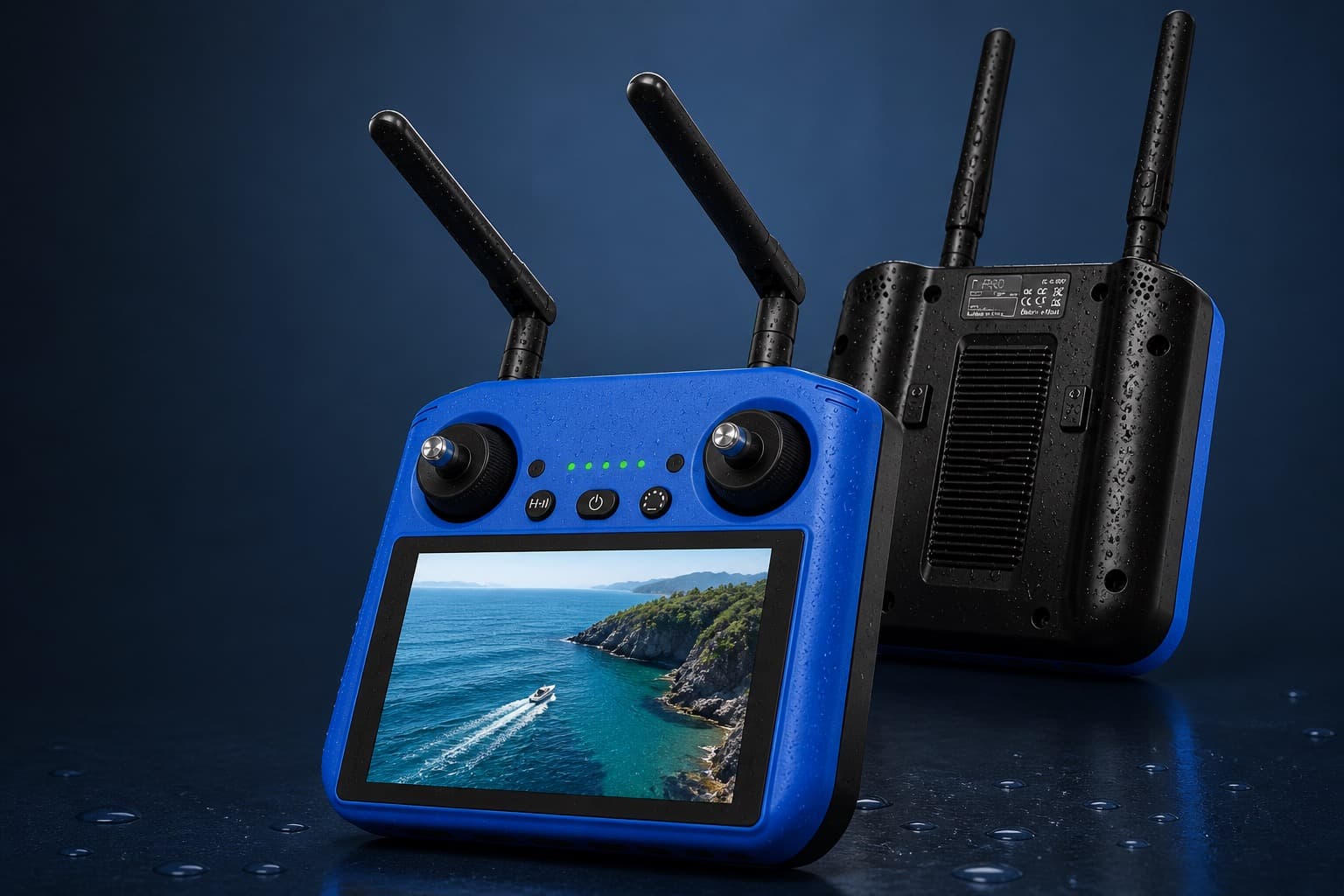
Larger high-brightness screen, enhanced image-transmission stability, and industry-leading waterproof performance — built for reliable control in any maritime environment.
The T3 is a high-integration tri-sensor imaging payload engineered for OEM platforms performing precision industrial inspection, search and rescue, and geospatial surveying.
Yes. The system features a 640×512 radiometric thermal sensor with 30 Hz output, ≤50 mK NETD sensitivity, and 16-bit R-JPEG export — essential for precise heat-signature analysis and automated fault detection.
The T3 is designed for deep integration, weighing 385 g (including the IP67-rated housing and 3-axis gimbal) and utilizing native SDKs for direct-to-flight-controller communication.
OEM partners deploy these systems across energy and utilities (solar/power-line), public safety (patrol and incident response), industrial maintenance, and geospatial mapping where synchronized thermal and visible data is required.
All channels are coordinated under a single deterministic processing pipeline for synchronized metadata across all frames.
Yes. We provide comprehensive documentation and low-latency firmware interfaces for integrators developing custom Ground Control Stations (GCS) or specialized flight software.
Thiessentech maintains a secure, EU-regulated supply chain headquartered in Estonia, providing transparent export compliance and long-term lifecycle support for international public-sector and industrial programs.
Technical documentation, including 3D CAD models (STEP) and pinout diagrams, is provided upon request during evaluation.
Yes. The T3-C (Core Module) is a simplified version of the T3 without the IP67 housing or laser-ranging module. It retains the visible and radiometric thermal channels, synchronized processing pipeline, and SDK integration, making it suitable for cost-sensitive, indoor, or custom-enclosure OEM platforms.
Sample units are built in low quantities and include full calibration, testing, and engineering support. These evaluation units are produced individually rather than on a production line, which increases per-unit cost. Production pricing is significantly lower and depends on configuration, annual volume, and integration requirements.
Provide your integration requirements below. Our engineering team will review your mission profile and respond with a sample-order plan or a tiered volume production quote.